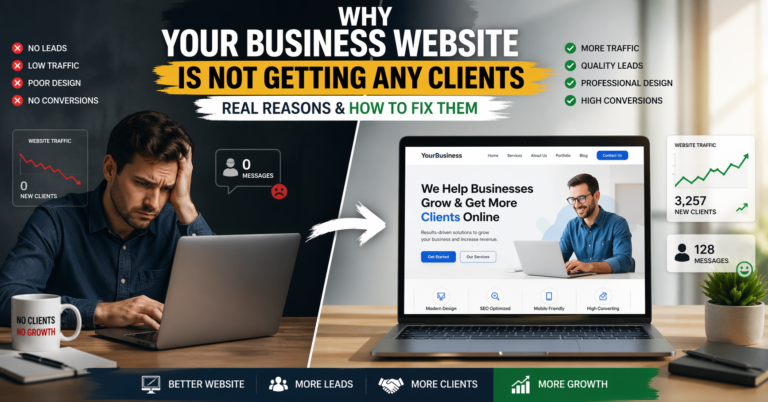
In today’s digital-first world, having a business website is no longer optional—it is expected. Yet, many business owners find themselves in a frustrating situation: their website exists, it looks “okay,” and it even gets some visitors—but no clients. No inquiries. No sales. No real results.
If this sounds familiar, you’re not alone. The truth is, most business websites fail not because the idea is wrong, but because the execution is incomplete. A website is not just a digital brochure; it is a powerful tool that should actively convert visitors into clients.
This guide explores the real reasons why your business website is not getting any clients—and more importantly, how you can fix each issue effectively.
Understanding the Core Problem: Traffic vs Conversion
Before diving into the specific reasons, it’s important to understand a key concept: getting traffic and getting clients are two different things.
Many business owners focus only on bringing people to their website. While traffic is important, it means nothing if those visitors don’t take action. A successful website must do both:
- Attract the right audience
- Convert that audience into paying clients
If your website is failing, it’s likely because one—or both—of these areas are weakYour Website Lacks a Clear Value Proposition
One of the most common mistakes is not clearly communicating what you offer and why it matters.
When a visitor lands on your website, they should immediately understand:
- What your business does
- Who it is for
- Why they should choose you
If your homepage is vague or overly generic, visitors will leave within seconds. People don’t have time to figure things out—they want instant clarity.
A strong value proposition is simple, direct, and focused on benefits rather than features. Instead of saying “We provide digital solutions,” say something like “We help small businesses get more clients through high-converting websites.”
Poor Website Design and User Experience
First impressions matter—especially online. If your website looks outdated, cluttered, or unprofessional, visitors will not trust your business.
Design is not just about appearance; it’s about usability. A good website should feel easy and natural to navigate. If users struggle to find information, they will leave without taking action.
Common design issues include:
- Slow loading speed
- Confusing navigation
- Too many colors or fonts
- Poor mobile responsiveness
Your website should be clean, modern, and optimized for all devices. Remember, a professional design builds trust, and trust leads to conversions.
Essay Writing Assignments
No Clear Call-to-Action (CTA)
A surprising number of websites fail because they don’t tell users what to do next.
After visiting your site, a potential client should be guided toward a specific action, such as:
- Contacting you
- Filling out a form
- Requesting a quote
- Booking a consultation
If your website lacks clear calls-to-action, visitors may leave simply because they don’t know the next step.
Effective CTAs are visible, action-oriented, and repeated throughout the site. Phrases like “Get Started Today,” “Contact Us Now,” or “Request Your Free Quote” can significantly improve engagement.
You’re Targeting the Wrong Audience
Not all website traffic is valuable. If your content is attracting the wrong audience, you won’t get clients—no matter how many visitors you have.
For example, if you offer professional services but your content appeals to beginners looking for free advice, those visitors are unlikely to convert into paying clients.
To fix this, you need to:
- Define your ideal customer
- Create content specifically for them
- Use language that speaks to their needs and problems
When your website aligns with the right audience, conversions naturally improve.
Online Essay Writing
Weak or Non-Existent SEO Strategy
If your website is not optimized for search engines, it won’t attract the right traffic in the first place.
Search Engine Optimization (SEO) ensures that your website appears in search results when potential clients are looking for your services. Without SEO, your website is essentially invisible.
Key SEO issues include:
- Not using relevant keywords
- Poor content structure
- Lack of high-quality blog content
- Missing meta titles and descriptions
For example, creating helpful blog posts like “How to Write a Perfect Assignment” or “Tips for Academic Writing Success” can attract students who may eventually need professional assistance.
SEO is not a one-time task—it requires consistent effort and content creation.
Your Content Doesn’t Build Trust
People don’t buy from businesses they don’t trust. If your website lacks credibility, visitors will hesitate to contact you.
Trust-building elements include:
- Testimonials and reviews
- Case studies or success stories
- Clear contact information
- Professional branding
If your website feels anonymous or incomplete, users will assume your service is unreliable.
Adding real client feedback and showcasing your expertise can significantly improve your chances of converting visitors into clients.
Your Website Is Too Focused on You
Many websites make the mistake of focusing too much on the business instead of the customer.
Instead of constantly talking about your services, shift your focus to the client’s needs. Ask yourself:
- What problems are they facing?
- How can you solve those problems?
- What results can they expect?
When your content is customer-centered, it becomes more engaging and persuasive.
Slow Loading Speed Is Driving Visitors Away
Speed plays a critical role in user experience. Studies show that users leave a website if it takes more than a few seconds to load.
A slow website not only frustrates visitors but also negatively affects your search engine rankings.
Common causes of slow speed include:
- Large image files
- Poor hosting
- Unoptimized code
Improving your website speed can have an immediate impact on both traffic and conversions.
No Lead Capture Strategy
Even if visitors are not ready to buy immediately, you should still capture their information for future engagement.
Without a lead capture system, you lose potential clients who might have converted later.
Effective strategies include:
- Email subscription forms
- Free resources (guides, templates)
- Newsletter sign-ups
For example, offering a free guide like “Top Assignment Writing Tips for Students” can encourage visitors to share their email addresses.
Lack of Consistent Content Updates
A static website rarely performs well. Search engines and users both prefer websites that are regularly updated with fresh content.
Blogging is one of the most effective ways to:
- Improve SEO
- Establish authority
- Attract new visitors
If your website hasn’t been updated in months, it may appear inactive or outdated.
Publishing high-quality, helpful content consistently can dramatically improve your website’s performance.
How to Turn Your Website Into a Client-Generating Machine
Fixing your website doesn’t require starting from scratch. Small, strategic improvements can make a big difference.
Focus on:
- Clear messaging
- Professional design
- Strong CTAs
- Targeted content
- Ongoing SEO efforts
Think of your website as a system—not just a page. Every element should work together to guide visitors toward becoming clients.
Final Thoughts
If your business website is not getting any clients, the problem is not just bad luck—it’s a combination of missed opportunities.
The good news is that every issue discussed in this guide is fixable. By understanding what’s going wrong and taking action, you can transform your website into a powerful tool for growth.
Your website should not just exist—it should perform. And when it does, it becomes one of your most valuable business assets.