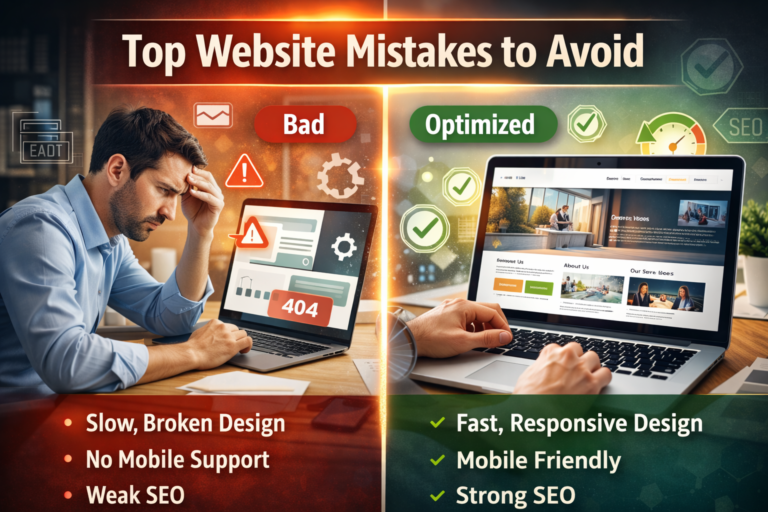
Creating a business website is no longer optional in today’s digital landscape—it is essential. Your website is often the first interaction potential customers have with your brand, and first impressions matter more than ever. A well-designed website can attract, engage, and convert visitors into loyal customers. However, many businesses make critical mistakes during the website creation process that can hurt their online presence and limit growth.
This comprehensive guide explores the most common mistakes businesses make when creating a website and, more importantly, how you can avoid them. Whether you are launching your first website or improving an existing one, this guide will help you build a strong, effective online presence.
Why Avoiding Website Mistakes Matters
Before diving into specific mistakes, it is important to understand why these errors can be so damaging. A poorly designed website can lead to high bounce rates, low search engine rankings, and lost business opportunities. In contrast, a well-optimized website improves user experience, builds trust, and drives conversions.
Businesses that invest time in avoiding common pitfalls often gain a competitive advantage. They not only attract more visitors but also retain them longer and convert them more effectively.
Lack of Clear Purpose and Strategy
One of the biggest mistakes businesses make is creating a website without a clear purpose. Many websites look visually appealing but fail to communicate what the business actually offers.
Every website should have a defined goal. Whether it is generating leads, selling products, or building brand awareness, your website should guide visitors toward a specific action. Without a clear strategy, your website becomes confusing and ineffective.
To avoid this mistake, start by identifying your target audience and defining your business objectives. Then design your website structure and content around these goals.
Essay Writing Assignments
Poor User Experience (UX)
User experience plays a crucial role in the success of any website. If visitors find your website difficult to navigate, they are likely to leave within seconds.
Common UX issues include cluttered layouts, confusing navigation, and slow loading pages. These problems create frustration and reduce user engagement.
A good website should be simple, intuitive, and easy to navigate. Visitors should be able to find what they are looking for quickly and without confusion. Focus on clean design, clear menus, and logical page structure to improve user experience.
Ignoring Mobile Responsiveness
In 2026, most users access websites through mobile devices. Ignoring mobile responsiveness is a major mistake that can cost you a significant portion of your audience.
A non-responsive website looks broken on smaller screens and provides a poor user experience. This not only frustrates users but also negatively impacts your SEO rankings.
To avoid this issue, ensure your website is fully responsive. It should adapt seamlessly to different screen sizes and provide a consistent experience across all devices.
Slow Website Speed
Website speed is one of the most important factors affecting user experience and search engine rankings. A slow website can drive visitors away before they even see your content.
Several factors can contribute to slow loading times, including large images, poor hosting, and unoptimized code.
Improving website speed requires optimizing images, using reliable hosting, and minimizing unnecessary scripts. A fast-loading website keeps users engaged and improves overall performance. Online Essay Writing
Weak or Missing SEO Strategy
Search engine optimization (SEO) is essential for driving organic traffic to your website. Many businesses make the mistake of ignoring SEO during the website development process.
Without proper SEO, your website may not appear in search engine results, making it difficult for potential customers to find you.
An effective SEO strategy includes keyword optimization, proper heading structure, meta tags, and high-quality content. Additionally, internal linking—such as connecting relevant pages within your site—helps improve navigation and search engine visibility.
Low-Quality Content
Content is the backbone of any successful website. Poorly written or irrelevant content can damage your credibility and fail to engage your audience.
Your website content should be clear, informative, and tailored to your target audience. It should address their needs, answer their questions, and provide value.
For example, creating helpful blog posts like “How to Build a Professional Business Website” or “Complete SEO Guide for Beginners” can attract visitors and establish your authority in the industry.
Lack of Clear Call-to-Action (CTA)
A common mistake is failing to guide visitors toward a specific action. Without clear calls-to-action (CTAs), users may leave your website without taking any meaningful steps.
CTAs can include actions like “Contact Us,” “Get a Quote,” or “Buy Now.” These elements should be visible, compelling, and strategically placed throughout your website.
A strong CTA encourages users to engage with your business and increases conversion rates.
Overcomplicated Design
While creativity is important, overly complex designs can do more harm than good. Too many colors, animations, and elements can overwhelm users and distract them from your message.
A clean and simple design is often more effective. It improves readability, enhances user experience, and keeps visitors focused on your content.
Remember, simplicity does not mean boring—it means clarity and effectiveness.
Ignoring Security Measures
Website security is often overlooked, but it is a critical aspect of maintaining user trust. A lack of security can expose your website to cyber threats and data breaches.
Basic security measures include using HTTPS, updating software regularly, and implementing strong passwords. These steps help protect your website and your users’ data.
A secure website not only builds trust but also improves your search engine rankings.
Not Tracking Performance
Many businesses launch their website and then forget to monitor its performance. This is a major mistake because you cannot improve what you do not measure.
Tracking tools like analytics software help you understand user behavior, traffic sources, and conversion rates. This data allows you to identify areas for improvement and make informed decisions.
Regularly analyzing your website performance ensures continuous growth and optimization.
Failing to Update and Maintain the Website
A website is not a one-time project—it requires ongoing maintenance. Outdated content, broken links, and old designs can make your website look unprofessional.
Regular updates keep your website fresh, relevant, and secure. This includes updating content, fixing technical issues, and improving design elements.
Consistent maintenance ensures that your website continues to perform effectively over time.
Not Understanding Your Target Audience
A successful website is built around the needs of its audience. Many businesses make the mistake of focusing on themselves rather than their customers.
Understanding your audience involves knowing their preferences, challenges, and expectations. Your website should address these factors and provide solutions.
When you create content and design with your audience in mind, you build stronger connections and improve engagement.
Final Thoughts
Creating a successful business website requires careful planning, strategic thinking, and attention to detail. Avoiding common mistakes can make a significant difference in how your website performs and how your audience perceives your brand.
From defining a clear purpose to optimizing for SEO and user experience, every aspect of your website plays a role in its success. By focusing on simplicity, functionality, and value, you can create a website that not only attracts visitors but also converts them into loyal customers.
If you are planning to build or improve your website, take the time to apply the strategies discussed in this guide. A well-designed, optimized website is one of the most powerful tools for growing your business in the digital age.