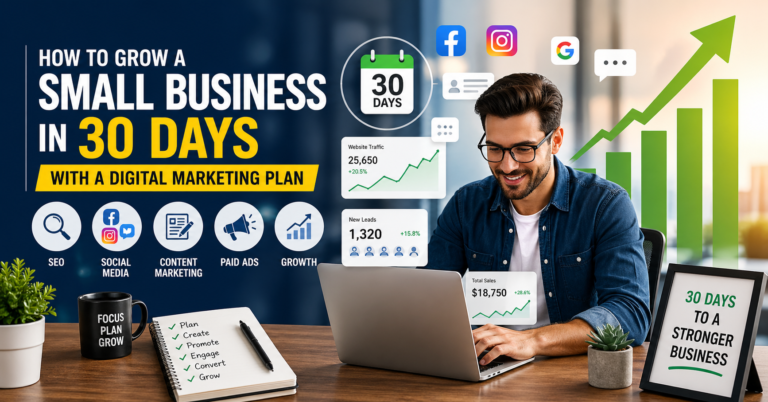
Growing a small business in today’s competitive online landscape can feel overwhelming, especially when resources are limited and expectations are high. However, with a focused and well-structured digital marketing plan, it is entirely possible to achieve noticeable growth within just 30 days. This guide is designed to provide a complete roadmap for small business owners who want practical, actionable strategies rather than vague advice.
A successful 30-day marketing plan does not rely on luck or expensive tools. Instead, it focuses on clarity, consistency, and smart execution. By understanding your audience, optimizing your online presence, and using the right marketing channels, you can attract more customers, build trust, and increase conversions in a short period of time. Understanding the Foundation of Digital Growth.
Before jumping into strategies, it is essential to understand what “growth” actually means for your business. Growth could be increased website traffic, more leads, higher sales, or stronger brand awareness. Defining this goal clearly will help you measure success and stay focused throughout the 30-day plan.
Equally important is knowing your target audience. Many small businesses fail to grow because they try to reach everyone instead of focusing on a specific group. Identify who your ideal customer is, what problems they face, and how your product or service solves those problems. This clarity will guide all your marketing efforts moving forward. Essay Writing Assignments
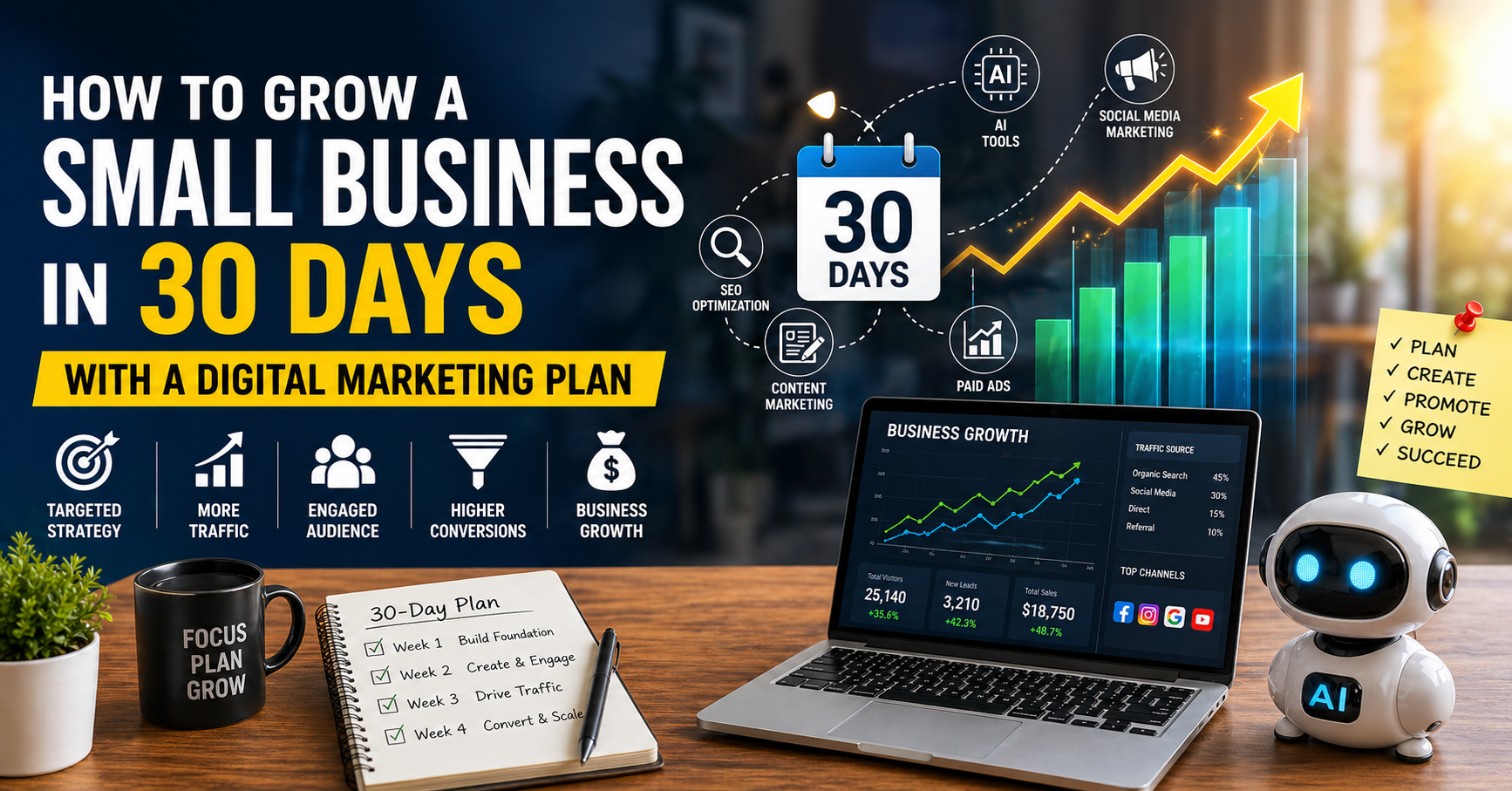
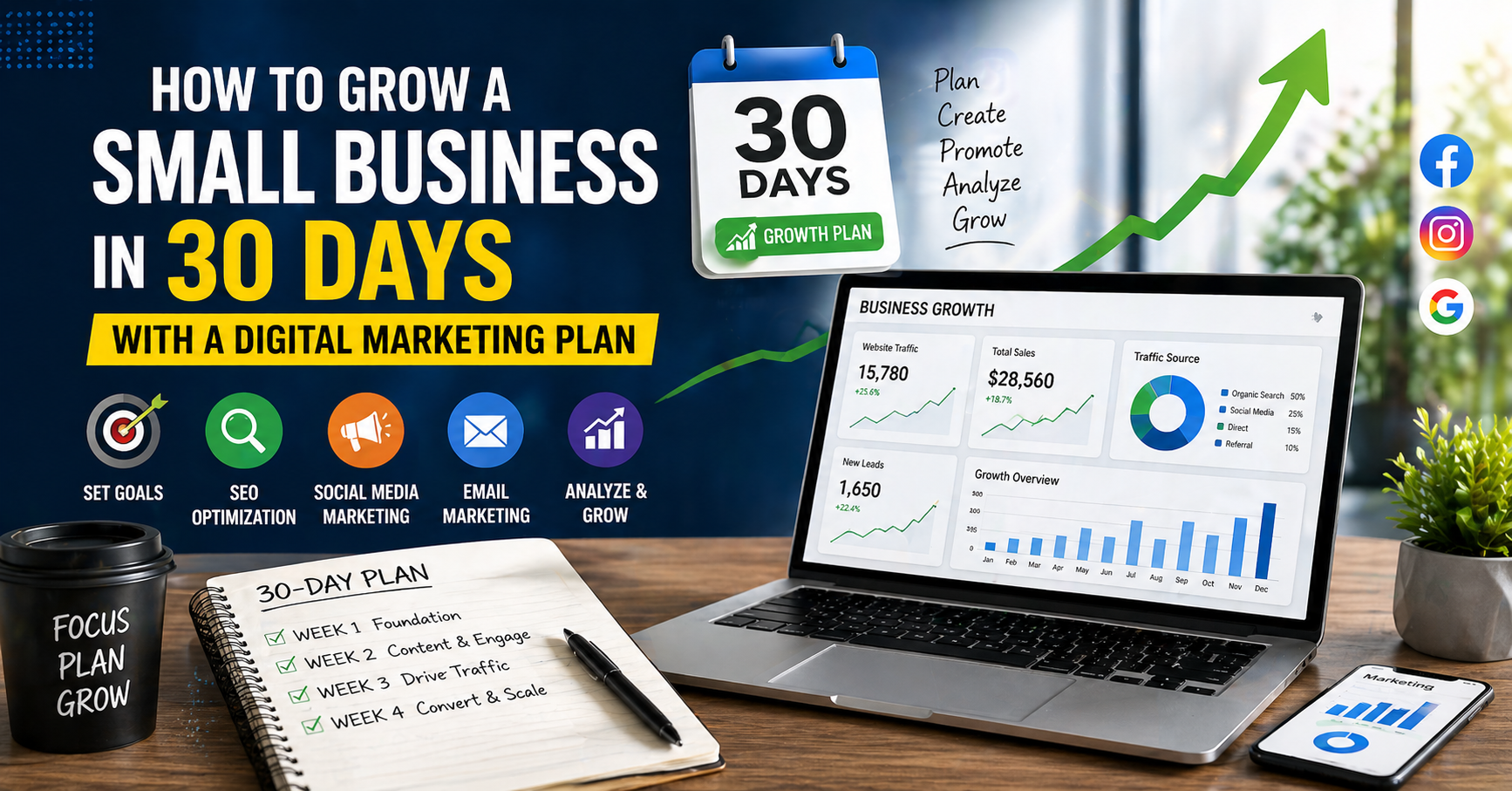
Week 1: Building a Strong Digital Presence
The first week is all about setting up or improving your online foundation. Start by ensuring your website is professional, fast, and mobile-friendly. Your website acts as your digital storefront, so it must clearly communicate what you offer and why customers should choose you.
Search Engine Optimization (SEO) is another crucial step during this phase. Optimize your website content with relevant keywords related to your business. Focus on writing clear headings, improving page speed, and adding meta descriptions. These small improvements can significantly increase your visibility on search engines.
At the same time, create or optimize your social media profiles. Choose platforms where your audience is most active rather than trying to be everywhere. Consistent branding, including your logo, colors, and messaging, helps build trust and recognition.
How Headless CMS Improves Website Performance in 2026
Week 2: Content Creation and Engagement
Once your foundation is ready, the next step is to create valuable content that attracts and engages your audience. Content marketing is one of the most powerful tools for small businesses because it builds trust without requiring a large budget.
Start by publishing blog posts, social media content, or short videos that address your audience’s needs. For example, if you run a service-based business, create guides, tips, or tutorials that solve common problems. This positions you as an expert in your field.
Engagement is just as important as content creation. Respond to comments, messages, and inquiries promptly. Building relationships with your audience increases loyalty and encourages word-of-mouth marketing, which is essential for rapid growth.
Week 3: Driving Traffic Through Paid and Organic Strategies
By the third week, your focus should shift toward driving traffic to your business. Organic methods like SEO and social media take time, so combining them with paid advertising can accelerate results. Online Essay Writing
Platforms like Facebook and Google Ads allow you to target specific audiences based on their interests, location, and behavior. Even a small budget can generate significant results if your targeting is precise and your message is clear.
At the same time, continue improving your organic reach. Share your content consistently, collaborate with other creators or businesses, and encourage satisfied customers to leave reviews. Social proof plays a powerful role in influencing new customers.
Week 4: Conversion Optimization and Scaling
The final week focuses on turning visitors into customers. Driving traffic is important, but converting that traffic into sales is what truly defines growth.
Start by analyzing your website and marketing performance. Identify what is working and what needs improvement. For example, if people are visiting your website but not making purchases, you may need to improve your call-to-action, pricing presentation, or overall user experience.
Email marketing can also be highly effective during this stage. Collect email addresses through your website and send targeted offers, updates, or valuable content. This helps you stay connected with potential customers and increases the chances of conversion.
Common Mistakes to Avoid
While following a 30-day plan, it is important to avoid common mistakes that can slow down your progress. One of the biggest mistakes is inconsistency. Posting content irregularly or abandoning campaigns too soon can prevent you from seeing results.
Another mistake is focusing too much on quantity instead of quality. Creating meaningful, helpful content is far more effective than posting frequently without purpose. Lastly, ignoring data and analytics can limit your growth. Always track your performance and adjust your strategy accordingly.
Final Thoughts: Achieving Sustainable Growth
Growing a small business in 30 days is not about overnight success but about building momentum. The strategies outlined in this guide are designed to create a strong foundation that continues to deliver results even after the initial 30 days.
By staying consistent, understanding your audience, and continuously improving your approach, you can turn short-term growth into long-term success. Digital marketing is not a one-time effort but an ongoing process that evolves with your business and market trends.
If you apply these steps with dedication and focus, you will not only see growth within 30 days but also set your business on a path toward sustained success in the digital world.
[…] How to Grow a Small Business in 30 Days with a Digital Marketing Plan […]