
Introduction of Future of Artificial Intelligence
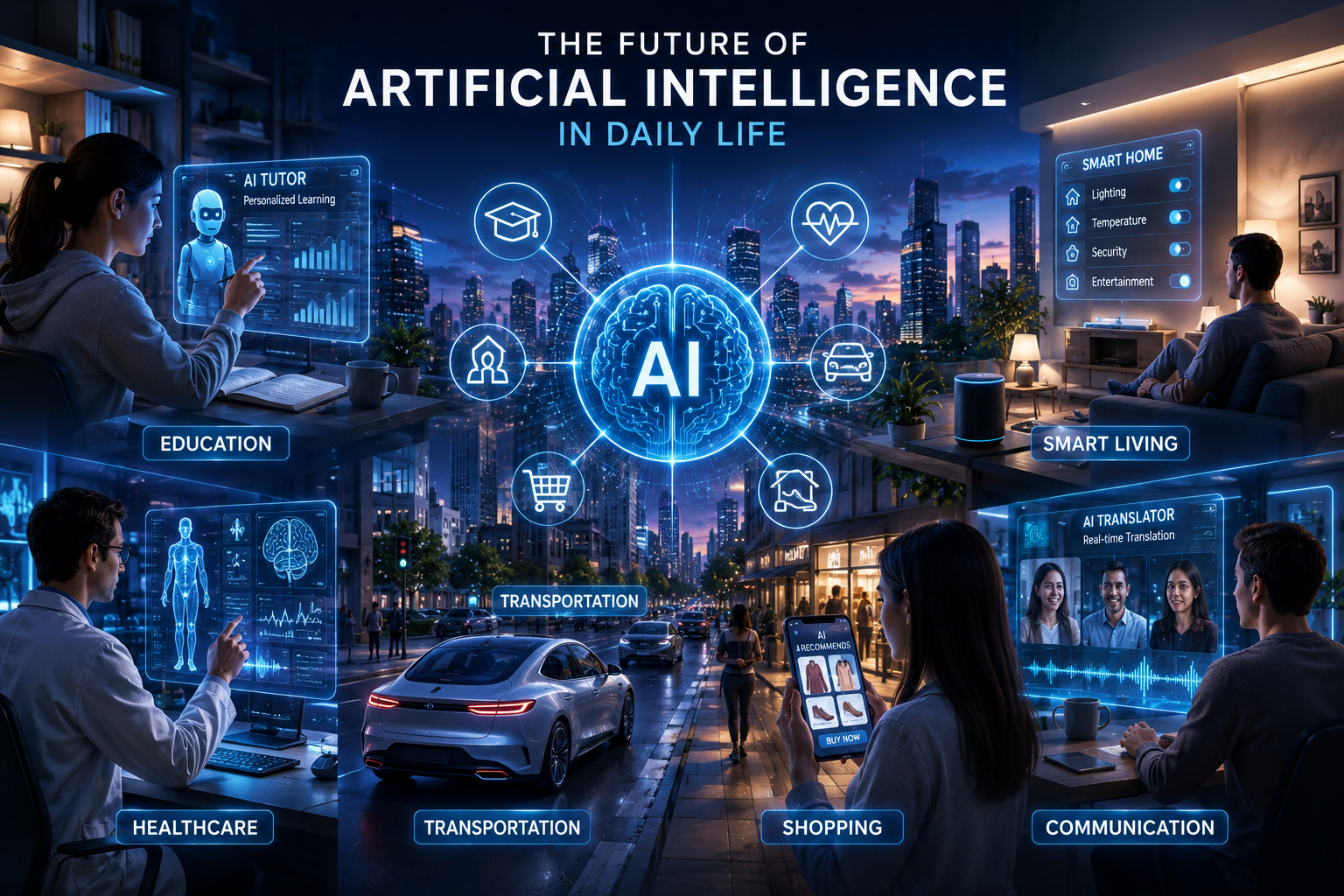
Artificial Intelligence (AI) is no longer just a concept of the future—it is already deeply embedded in our daily lives. From the moment we wake up and check our smartphones to the time we go to sleep using smart devices, AI quietly powers much of what we do. In 2026, its influence has become even more powerful, shaping education, communication, healthcare, business, and entertainment in ways that were once unimaginable.
For students, understanding AI is no longer optional. It is becoming a core skill that can improve learning, productivity, and even career opportunities. This blog explores how AI is transforming daily life, what changes we can expect in the future, and how students can benefit from this technological revolution.
Future of Artificial Intelligence
What is Artificial Intelligence in Simple Terms?
Artificial Intelligence refers to the ability of machines and computer systems to perform tasks that normally require human intelligence. These tasks include learning, problem-solving, decision-making, language understanding, and pattern recognition.
Unlike traditional software, AI systems can improve over time by analyzing data. This is why AI-powered tools become smarter the more they are used.
In simple words, AI is like a digital brain that helps machines think, learn, and respond intelligently.Future of Artificial Intelligence
How AI is Already Part of Our Daily Life
Many people think AI is something futuristic, but in reality, it is already everywhere. Most students and professionals use AI daily without even realizing it.
1. Smartphones and Virtual Assistants
When you use voice assistants like Siri, Google Assistant, or Alexa, you are interacting with AI. These systems understand your voice, process your request, and respond instantly.
2. Social Media Algorithms
Platforms like Instagram, TikTok, and YouTube use AI to decide what content you see. They analyze your behavior and recommend posts, videos, and ads based on your interests.
3. Online Learning Platforms
AI-powered platforms help students learn more effectively by recommending personalized lessons, quizzes, and study materials.
4. Navigation and Maps
Apps like Google Maps use AI to predict traffic, suggest routes, and estimate travel time.
5. E-commerce Recommendations
When shopping online, AI suggests products based on your browsing history and preferences.
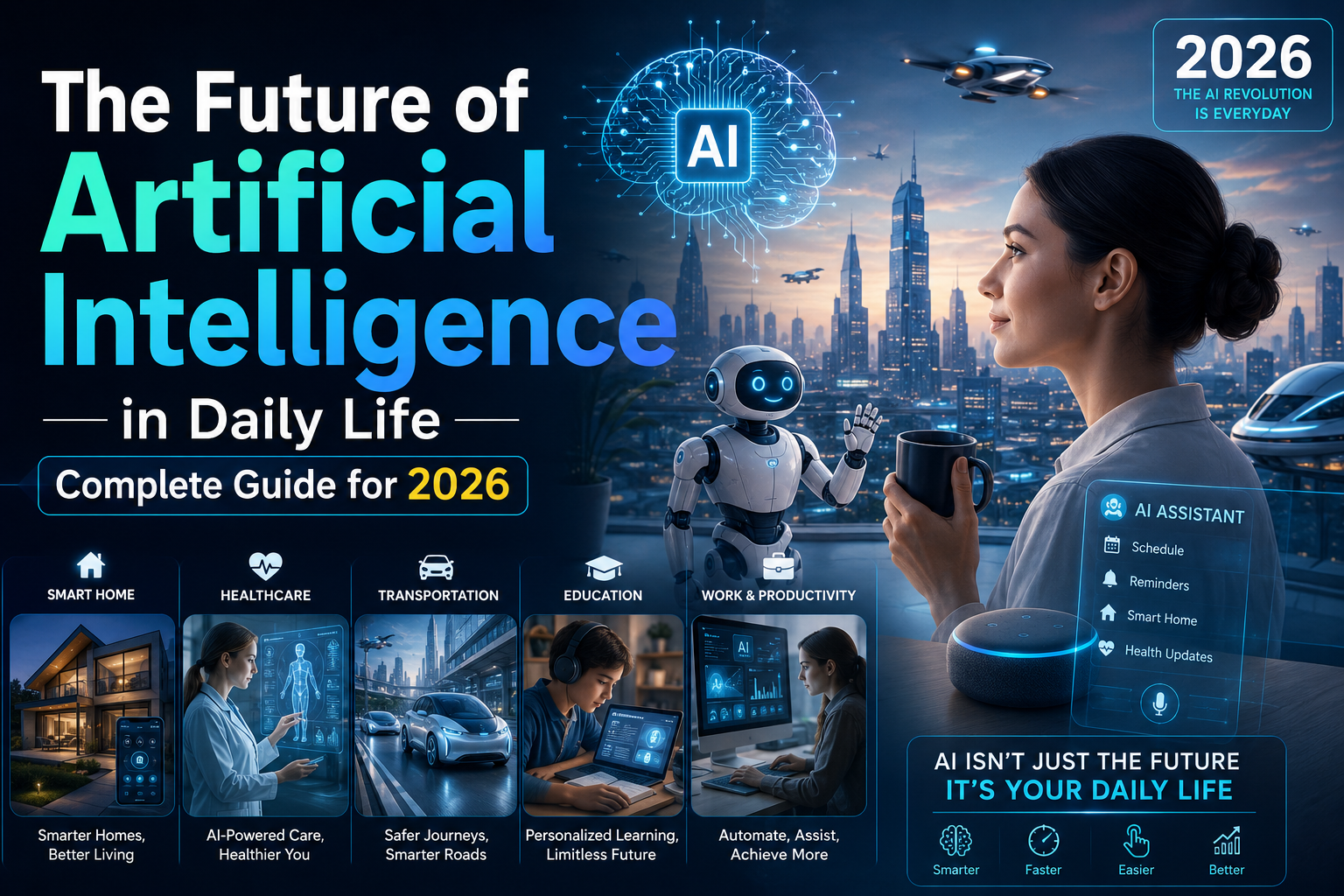
The Role of AI in Education
Education is one of the most important areas where AI is making a huge impact. For students, this is especially relevant because it changes how learning happens.Future of Artificial Intelligence
Personalized Learning Experience
AI can analyze a student’s strengths and weaknesses and create personalized study plans. This means students can learn at their own pace instead of following a one-size-fits-all system.
Future of Artificial Intelligence
AI Writing Assistance
Tools like grammar checkers, essay generators, and research assistants help students improve their writing skills. They can suggest better sentence structures, correct grammar mistakes, and even improve clarity.
Internal resource:
👉 /essay-writing-tips
Smart Tutoring Systems
AI tutors can answer student questions anytime, provide explanations, and even simulate one-on-one learning sessions.
Future of Artificial Intelligence
Time Management Support
AI tools help students plan study schedules, set reminders, and track academic progress.
AI in Assignment Writing and Academic Work
Assignment writing is one of the biggest challenges for students. AI is now making this process easier and more efficient.
Research Assistance
AI can quickly gather information from multiple sources, saving students hours of manual research.
Content Structuring
AI tools help organize ideas into proper essay formats including introduction, body paragraphs, and conclusion.
Grammar and Editing Support
AI ensures that assignments are free from spelling mistakes and grammatical errors.
However, it is important to remember that AI should be used as a support tool—not a replacement for original thinking.
Internal guide:
👉 /academic-writing-guide
AI in Communication and Social Life
AI is also changing how people communicate and interact socially.
Future of Artificial Intelligence
Translation Tools
AI-powered translation apps allow people from different languages to communicate easily in real time.
Smart Messaging
Email and messaging apps now use AI to suggest replies, detect spam, and organize conversations.
Social Media Interaction
AI filters content, moderates comments, and helps maintain safer online environments.
AI in Healthcare and Personal Well-being
Healthcare is one of the most promising fields for AI development.
Future of Artificial Intelligence
Disease Detection
AI systems can analyze medical data and detect diseases earlier than traditional methods.
Virtual Health Assistants
Patients can get medical advice through AI chat systems without visiting a hospital.
Fitness Tracking
Smartwatches and fitness apps use AI to monitor heart rate, sleep patterns, and physical activity.
AI in Business and Jobs
AI is reshaping the job market and business world.
Automation of Tasks
Many repetitive tasks like data entry, scheduling, and customer service are now automated using AI.
Future of Artificial Intelligence
New Career Opportunities
AI has created new job roles such as data scientists, machine learning engineers, and AI content creators.
Freelancing and Online Work
Students can now earn money using AI tools for writing, designing, and video editing.
Internal link:
👉 /ai-freelancing-guide
Future of Artificial Intelligence
The Positive Impact of AI on Daily Life
AI brings many benefits that improve quality of life:
- Saves time by automating tasks
- Improves accuracy in work and learning
- Provides personalized experiences
- Enhances communication and accessibility
- Supports decision-making in real-time
For students, AI acts as a digital assistant that helps reduce stress and increase productivity.
The Challenges and Risks of AI
While AI offers many advantages, it also comes with challenges.
Over-Reliance on Technology
Students may become too dependent on AI tools and stop developing critical thinking skills.
Privacy Concerns
AI systems collect large amounts of personal data, raising privacy issues.
Job Displacement
Some traditional jobs may be replaced by automation, requiring people to learn new skills.
Misinformation
AI-generated content is not always accurate, so verification is important.
The Future of AI in Daily Life
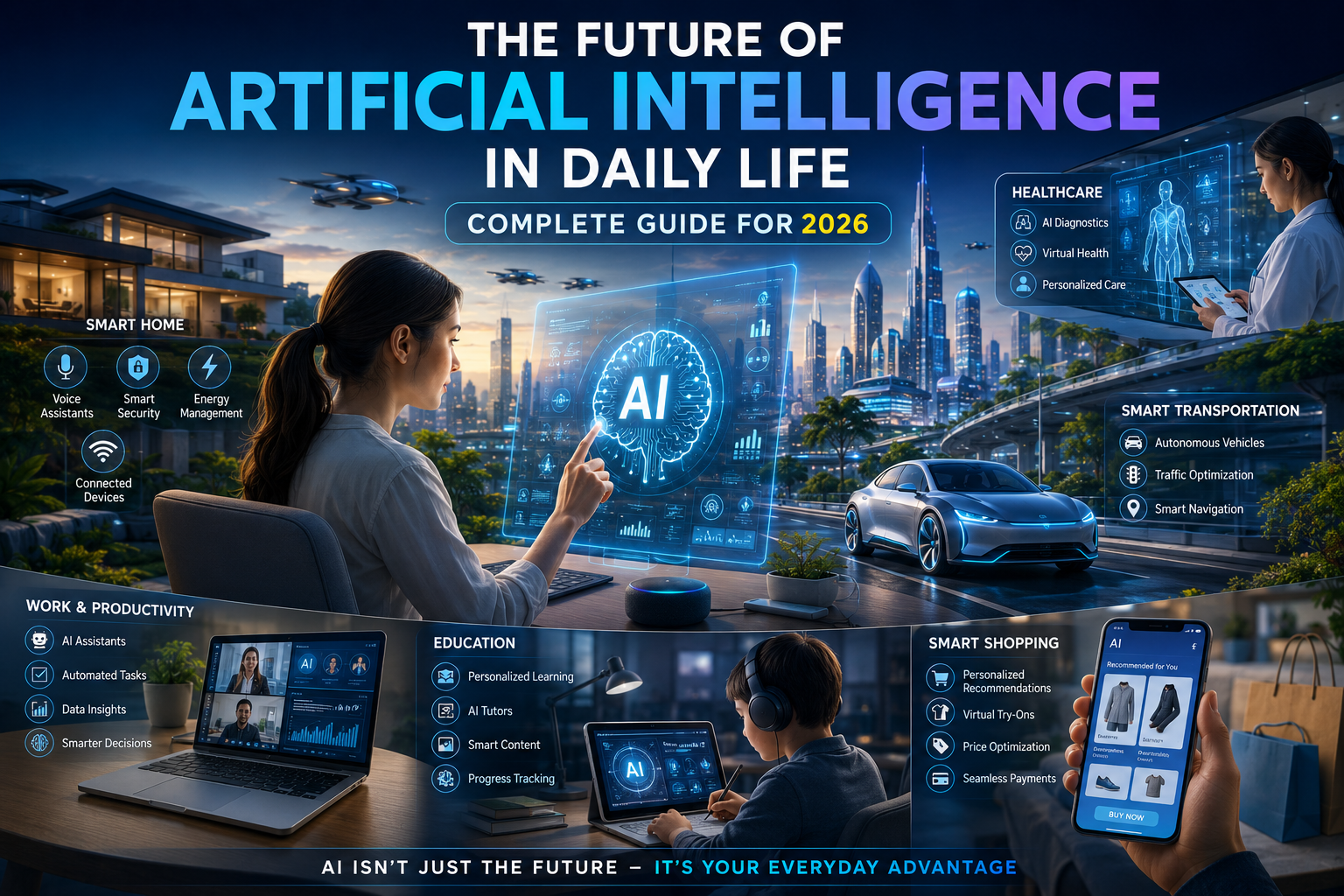
In the future, AI will become even more integrated into human life. Experts predict several major changes:Future of Artificial Intelligence
Smart Homes Everywhere
Homes will be fully automated, controlling lighting, temperature, security, and appliances using AI.
AI Teachers in Classrooms
Students may learn from virtual AI teachers that adapt teaching styles to individual needs.
Advanced Healthcare Systems
AI will diagnose diseases instantly and recommend personalized treatment plans.
Fully Autonomous Transportation
Self-driving cars and smart traffic systems will reduce accidents and improve travel efficiency.
Human-AI Collaboration
Instead of replacing humans, AI will work alongside them, enhancing productivity in every field.
How Students Can Prepare for an AI Future
To succeed in an AI-driven world, students should focus on developing both technical and soft skills.
Learn Digital Skills
Understanding basic AI tools, coding, and data analysis can be highly beneficial.
Improve Critical Thinking
AI can provide answers, but humans must learn how to analyze and interpret them.
Use AI Responsibly
Students should use AI for learning and improvement, not shortcuts or cheating.
Stay Updated
Technology changes quickly, so continuous learning is essential.Future of Artificial Intelligence
AI Tools That Actually Work: The Complete Guide for Students (2026)
AI and Assignment Writing: A Balanced Approach
For students, especially those working on assignments, AI should be seen as a support system rather than a replacement.
A smart approach includes:
- Using AI for brainstorming ideas
- Improving grammar and structure
- Conducting quick research
- But always writing final content independently
This ensures academic integrity while benefiting from modern tools.
Conclusion
Artificial Intelligence is no longer a distant concept—it is a powerful force shaping our present and future. From education to healthcare, communication to business, AI is transforming every part of daily life.
For students, this is both an opportunity and a responsibility. Those who learn how to use AI wisely will gain a strong advantage in their academic and professional careers. However, maintaining originality, creativity, and critical thinking remains essential.
The future of AI is not about replacing humans—it is about enhancing human potential. And those who adapt early will lead the world of tomorrow.
[…] The Future of Artificial Intelligence in Daily Life: Complete Guide for 2026 […]