Introduction
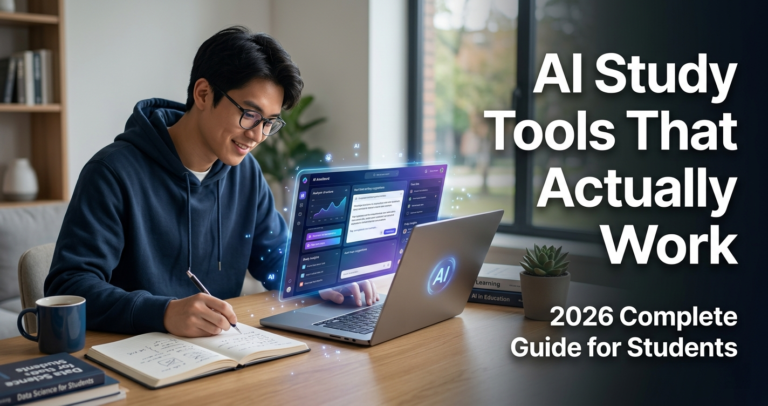
Artificial Intelligence has rapidly transformed how students approach their academic work. From writing essays to managing deadlines and improving research efficiency, AI tools are now deeply integrated into modern education. However, with so many tools available, students often struggle to identify which ones actually deliver real results.
This guide is designed to solve that problem. Instead of overwhelming you with endless options, we focus on AI study tools that genuinely work—tools that improve productivity, enhance writing quality, and support academic success without compromising integrity.
Whether you’re working on essays, assignments, or exam preparation, this comprehensive guide will show you how to use AI effectively and responsibly.
Why Students Are Turning to AI Tools
The growing popularity of AI in education is not accidental. Students today face increasing academic pressure, tighter deadlines, and higher expectations. AI tools provide practical solutions by saving time, improving accuracy, and offering instant support.
One of the key reasons students rely on AI is efficiency. Tasks that once took hours—like brainstorming ideas, structuring essays, or proofreading—can now be completed much faster. Additionally, AI tools help reduce stress by providing guidance and clarity, especially for students who struggle with writing or research.
However, not all AI tools are equally effective. Some offer real value, while others create more confusion. That’s why choosing the right tools is essential.

What Makes an AI Study Tool “Actually Work”?
Before diving into specific tools, it’s important to understand what separates effective AI tools from the rest.
A useful AI study tool should do more than just generate content. It should enhance your understanding, support your workflow, and help you produce high-quality academic work. The best tools are those that:
- Provide accurate and relevant information
- Improve writing clarity and structure
- Help with research and idea generation
- Save time without reducing learning quality
- Support ethical and plagiarism-free work
When used correctly, these tools act as assistants—not replacements—for your academic efforts.
AI Tools for Assignment Writing
Improving Essay Structure and Clarity
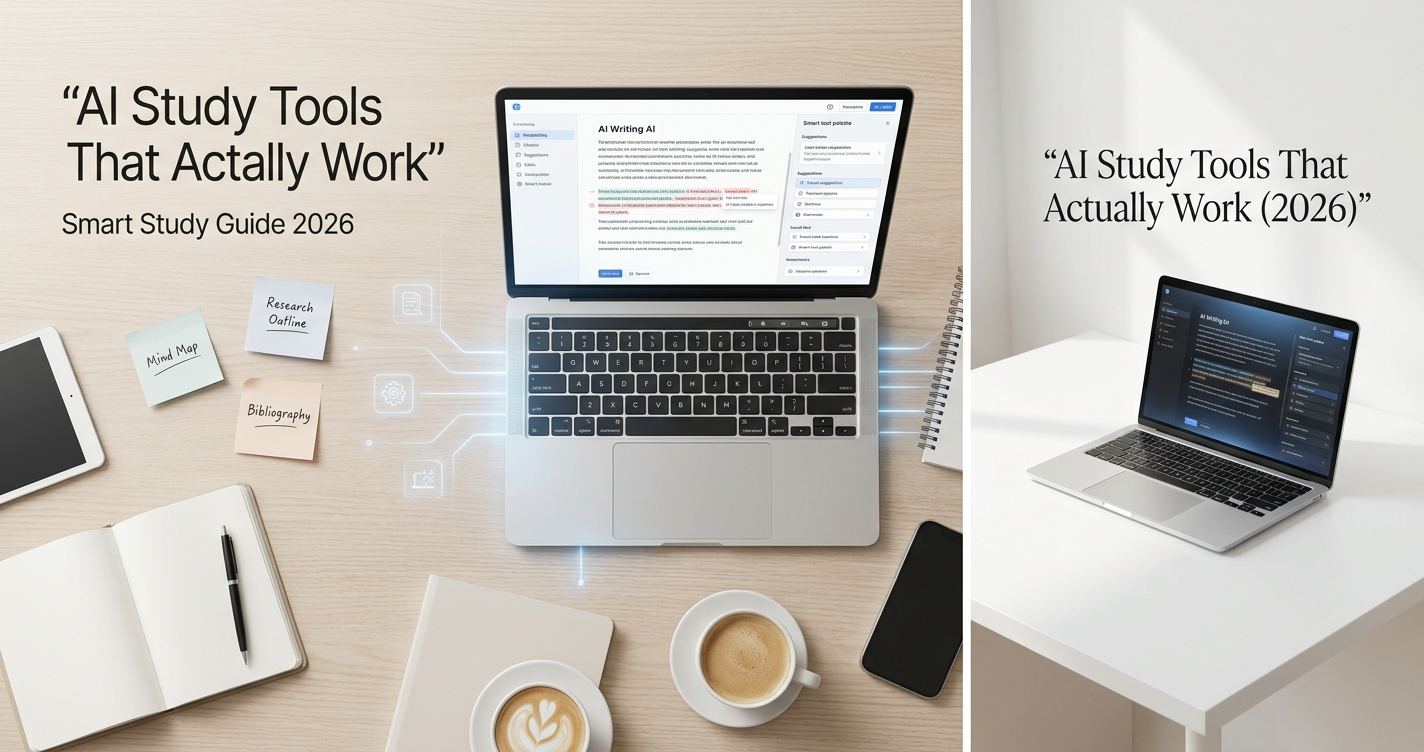
One of the biggest challenges students face is organizing their ideas into a clear and logical structure. AI writing assistants can help by suggesting outlines, refining thesis statements, and improving paragraph flow.
Instead of writing your entire essay for you, these tools guide you through the process. For example, if you’re unsure how to start an introduction, an AI tool can provide multiple approaches, helping you choose the most effective one.
This not only improves your writing but also strengthens your understanding of academic structure.
Enhancing Grammar and Academic Tone
Even strong ideas can lose impact if they are poorly expressed. AI-powered grammar tools help students refine their writing by correcting errors, improving sentence structure, and ensuring an academic tone.
These tools are especially useful for non-native English speakers, as they provide suggestions that enhance clarity without changing the original meaning.
Over time, using such tools can significantly improve your writing skills, making you more confident in your academic work.
AI Tools for Research and Idea Generation
Finding Relevant Information Faster
Research is often the most time-consuming part of assignment writing. AI tools simplify this process by summarizing complex topics, suggesting relevant sources, and highlighting key points.
Instead of spending hours searching through articles, students can quickly gain a basic understanding of a topic and then explore it in more depth.
However, it’s important to verify information and use credible sources. AI should assist your research—not replace critical thinking.
Generating Ideas and Overcoming Writer’s Block
Writer’s block is a common issue among students. AI tools can help by generating topic ideas, suggesting arguments, and offering different perspectives.
For example, if you’re stuck on how to approach an essay question, an AI tool can provide multiple angles, helping you choose the most suitable one.
This makes the writing process smoother and more engaging, especially when dealing with complex subjects.
AI Tools for Time Management and Productivity
Organizing Tasks and Deadlines
Academic success is not just about writing well—it’s also about managing time effectively. AI productivity tools help students organize their schedules, set reminders, and prioritize tasks.
By breaking down large assignments into manageable steps, these tools reduce overwhelm and improve consistency.
Students who use AI for time management often find it easier to meet deadlines and maintain a balanced workload.
AI vs Human Writing: Which Is Better for Academic Success?
Improving Focus and Study Habits
Distractions are one of the biggest challenges in modern learning environments. Some AI tools are designed to improve focus by tracking study sessions, minimizing interruptions, and analyzing productivity patterns.
These insights help students develop better study habits, leading to improved academic performance over time.
Ethical Use of AI in Academic Writing
While AI tools offer significant benefits, it’s important to use them responsibly. Misusing AI—such as submitting fully AI-generated content as your own—can lead to academic consequences.
Instead, students should use AI as a support system. This means:
- Using AI for guidance, not complete solutions
- Editing and personalizing all generated content
- Ensuring originality and proper citations
- Following university guidelines on AI usage
Ethical use of AI not only protects your academic integrity but also ensures real learning.
Common Mistakes Students Make with AI Tools
Despite their advantages, AI tools can be misused. One common mistake is over-reliance. Students sometimes depend entirely on AI, which limits their ability to think critically and develop their own ideas.
Another issue is عدم verification. AI-generated information is not always accurate, so it’s essential to cross-check facts with reliable sources.
Lastly, many students ignore personalization. Submitting generic AI content without editing can result in low-quality work that lacks originality.
Avoiding these mistakes ensures that AI tools truly enhance your academic performance.
How to Combine AI Tools with Traditional Study Methods
The most effective approach is not choosing between AI and traditional methods—but combining both.
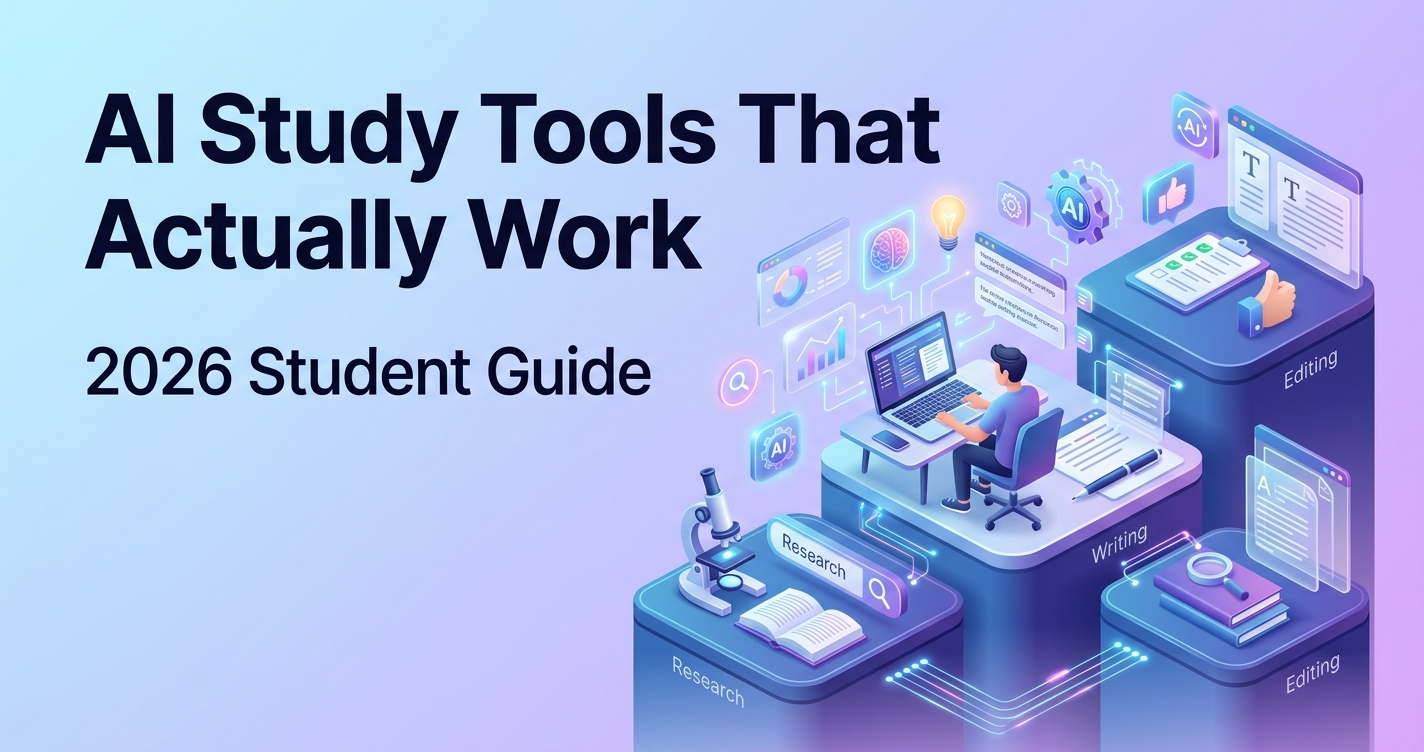
Start by using AI to generate ideas or outlines. Then, conduct your own research, develop arguments, and write the content in your own words. Finally, use AI tools for editing and refinement.
This balanced approach allows you to benefit from AI while still building essential academic skills.
Internal Resource for Students
If you’re looking to improve your assignment writing skills further, explore our detailed guide on academic writing strategies:
[How to Write Outstanding Essays: From Planning to Final Draft]
This resource complements AI tools by teaching you the fundamentals of strong academic writing.
The Future of AI in Student Learning
AI is not just a trend—it is shaping the future of education. As tools become more advanced, they will offer even more personalized learning experiences, adaptive feedback, and intelligent support systems.
However, the core principle will remain the same: AI is most effective when used as a learning companion, not a shortcut.
Students who learn how to use AI wisely today will have a significant advantage in their academic and professional careers.
Conclusion
AI study tools have the potential to transform how students learn, write, and manage their academic responsibilities. The key is not using every available tool, but choosing the ones that actually work and align with your needs.
By focusing on writing assistance, research support, and productivity tools—and using them ethically—you can significantly improve your academic performance.
Remember, AI is here to support your journey, not replace it. The real success comes from combining technology with your own effort, creativity, and critical thinking.
[…] AI Tools That Actually Work: The Complete Guide for Students (2026) […]