Introduction of AI vs Human
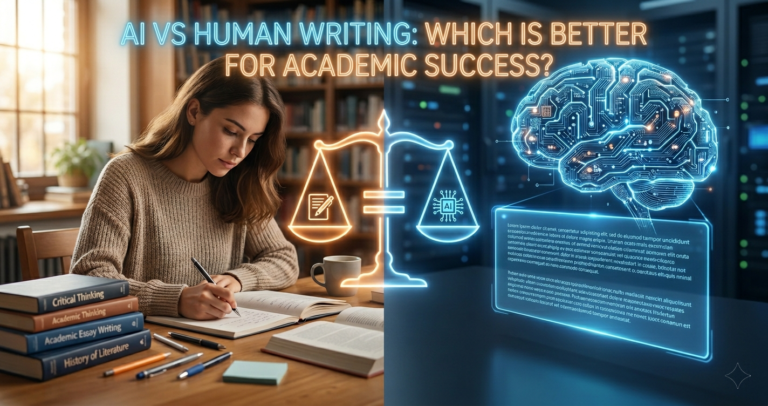
In today’s digital era, writing has transformed dramatically. Students no longer rely only on textbooks and manual research; instead, artificial intelligence tools like ChatGPT and other AI writing assistants are becoming common in academic life. This has created a major debate in education: AI vs human writing — which one is better?
For students working on assignments, essays, and research papers, understanding the difference between AI-generated content and human-written work is extremely important. Both approaches have their own strengths and weaknesses, and the best choice often depends on the situation, purpose, and academic requirements.
In this blog, we will explore AI writing and human writing in detail, compare their advantages and limitations, and help you decide which is more effective for your academic success.
AI vs Human
Understanding AI Writing
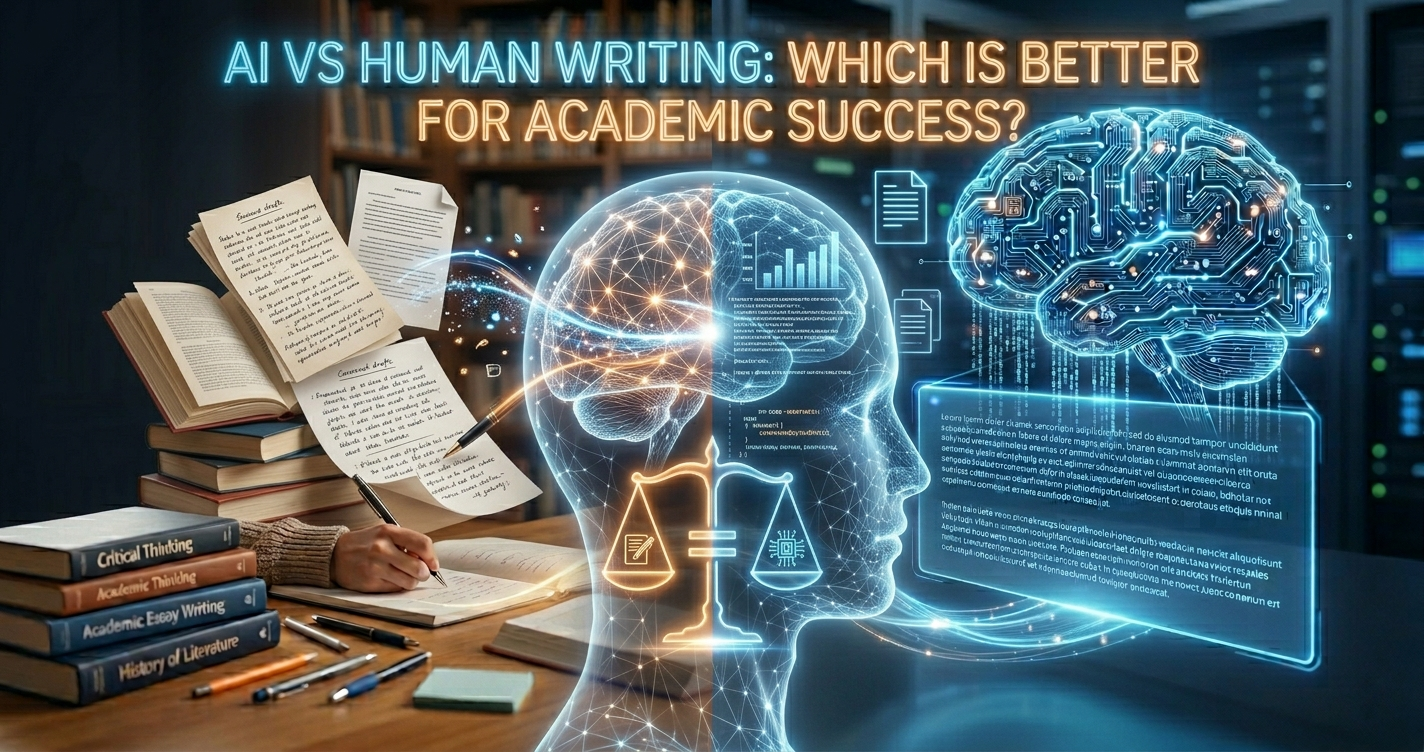
AI writing refers to content created using artificial intelligence tools that can generate text based on prompts. These tools analyze large datasets and produce structured, readable content within seconds. They are widely used for blogs, essays, summaries, and even research assistance.
AI writing tools are fast, efficient, and capable of producing large amounts of content in a very short time. For students, this can be helpful when dealing with tight deadlines or complex topics that require quick explanations.
However, AI writing is based on patterns and data rather than real human experience or deep understanding. This means the content may sometimes lack emotional depth, creativity, or personal insight.AI vs Human
Understanding Human Writing
Human writing is created by individuals using their own knowledge, experience, creativity, and critical thinking skills. It involves research, understanding, and personal interpretation of a topic.
Unlike AI, humans can express emotions, opinions, and unique perspectives. This makes human writing more engaging, relatable, and authentic—especially in academic assignments where critical thinking and originality are important.
Human writers also understand context better. They can adjust tone, style, and arguments depending on the audience and purpose of the content.AI vs Human
AI vs Human Writing: Key Differences
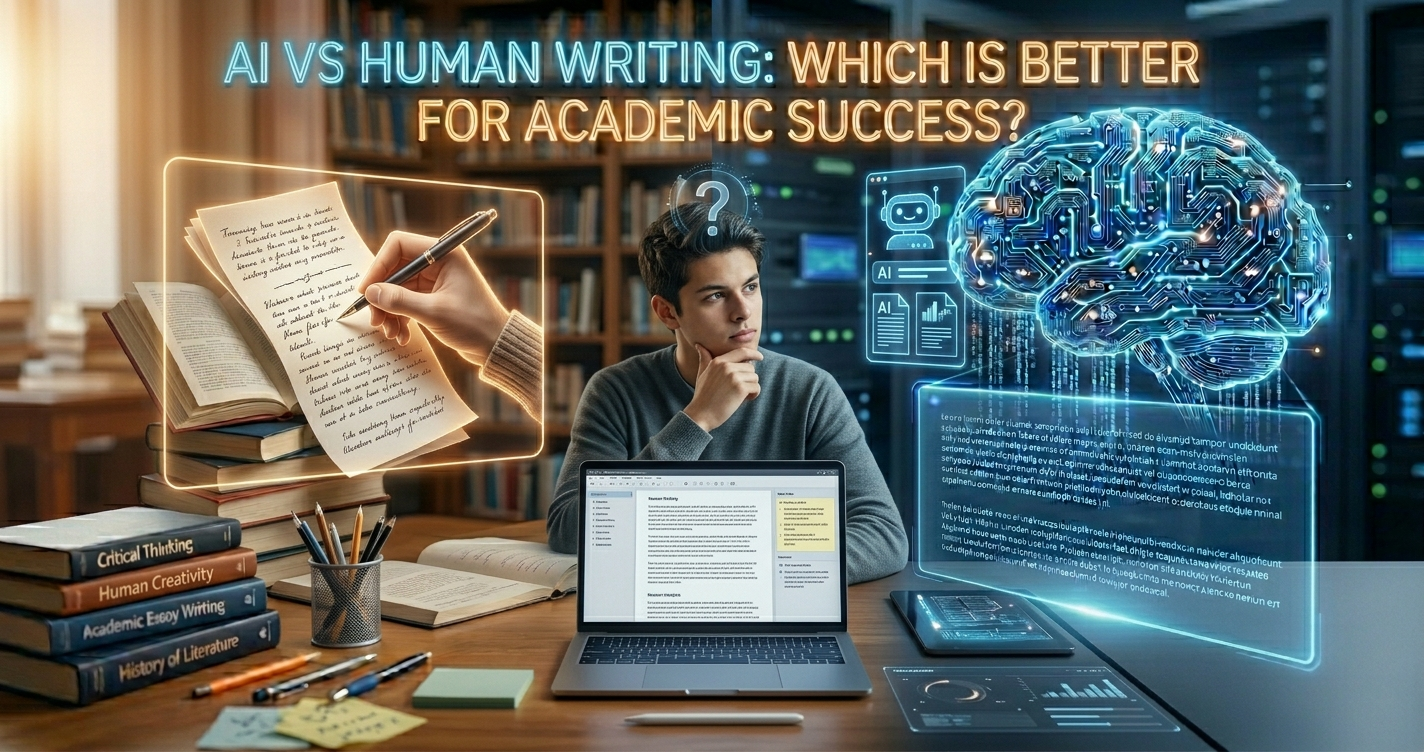
To better understand the debate, let’s break down the key differences between AI and human writing in academic contexts.
AI writing is extremely fast, while human writing takes more time due to research and thinking processes. AI can generate large amounts of content instantly, but human writing focuses on depth and originality.
When it comes to creativity, humans clearly have an advantage. AI can imitate styles but cannot truly create original ideas based on real-life experiences.
In terms of accuracy, AI is useful but not always reliable. It may produce outdated or generalized information. Humans, on the other hand, can verify facts and use trusted academic sources.
Another important difference is emotional intelligence. Human writing naturally reflects feelings, opinions, and personal voice, while AI-generated content often feels neutral and mechanical.AI vs Human
Advantages of AI Writing for Students
AI writing tools offer several benefits, especially for students managing heavy workloads.
One of the biggest advantages is speed. Students can generate ideas, outlines, or even full drafts in seconds. This is especially useful when deadlines are close.
AI also helps with brainstorming. If a student is stuck, AI tools can suggest topics, headings, and structures that make writing easier.
Another benefit is language support. Non-native English speakers can use AI to improve grammar, clarity, and sentence structure.
Additionally, AI tools can help in learning. By analyzing AI-generated content, students can understand how essays are structured and improve their own writing skills.AI vs Human
Limitations of AI Writing
Despite its advantages, AI writing has several limitations that students must understand.
First, AI lacks originality. Since it generates content based on existing data, it may produce similar or repetitive ideas.
Second, it does not always understand academic depth. Complex arguments, critical analysis, and subject-specific insights may not be fully accurate or meaningful.
Third, over-reliance on AI can harm learning. If students depend too much on AI, they may not develop their own writing and thinking skills.
Lastly, some academic institutions have strict rules about AI usage. Submitting AI-generated work without proper editing or understanding may lead to academic issues.AI vs Human
I Built an AI Assignment Writing Business in 7 Days – Here’s What Happened
Strengths of Human Writing
Human writing remains essential in education because it reflects true understanding and intellectual effort.
One of its biggest strengths is originality. Every student can bring their own ideas, examples, and perspectives into writing.
Human writing also allows deep analysis. Students can critically evaluate topics, compare theories, and build strong arguments.
Another advantage is adaptability. Humans can easily adjust tone and writing style depending on assignment requirements, whether formal, persuasive, or analytical.
Most importantly, human writing builds long-term skills. It improves thinking ability, research skills, and communication, which are essential for academic and professional success.AI vs Human
Limitations of Human Writing
While human writing is powerful, it also has some challenges.
It takes more time compared to AI writing. Researching, drafting, and editing can be a slow process.
Students may also struggle with language skills, grammar, or structure, especially if they are not confident writers.
Sometimes, lack of ideas or creativity blocks can make writing difficult and stressful.
However, these limitations can be improved with practice and the right guidance.AI vs Human

Which Is Better: AI or Human Writing?
The answer is not simple because both AI and human writing serve different purposes.
AI writing is better for speed, support, and idea generation. It is useful when students need quick help or guidance.
Human writing is better for originality, depth, and academic quality. It is essential for final submissions, essays, and research-based assignments.
The best approach is not choosing one over the other but combining both effectively. Students can use AI tools for brainstorming, structuring, and editing, while relying on their own knowledge and critical thinking for final content.AI vs Human
This balanced approach ensures efficiency without compromising academic integrity.
The Future of Academic Writing
The future of writing is not about replacing humans with AI but about collaboration between both. AI will continue to improve and assist students, but human creativity, judgment, and understanding will always remain irreplaceable.
Educational systems are also adapting by teaching students how to use AI responsibly rather than banning it completely.
In the coming years, successful students will be those who learn how to combine technology with their own intellectual abilities.
Final Thoughts
The debate between AI vs human writing is not about competition but collaboration. AI brings speed and convenience, while human writing brings depth and originality.
For students, the key is balance. Use AI as a helpful assistant, not a replacement. Develop your own writing skills while using technology to enhance productivity.
In academic assignments, the strongest work always comes from a combination of smart tools and human thinking.AI vs Human
[…] AI vs Human Writing: Which Is Better for Academic Success? […]