
Writing assignments is one of the most common academic responsibilities students face, yet it often becomes a major source of stress and procrastination. Many students struggle not because they lack ability, but because they do not follow a structured and efficient writing process. Deadlines feel overwhelming, ideas become difficult to organize, and the pressure to perform well can slow down progress even further.
The good news is that assignment writing does not have to be stressful or time-consuming. With the right approach, students can significantly improve their writing speed while maintaining high quality. This guide provides a complete, step-by-step method to help you write assignments faster, stay organized, and reduce stress throughout the process. By applying these strategies, you will not only save time but also improve your academic performance and confidence.

How Students Can Earn $100/Day Online Without Investment (Complete 2026 Guide)
Understanding Why Assignments Feel Stressful
Before learning how to write faster, it is important to understand what causes stress during assignment writing. In most cases, stress comes from poor planning, unclear understanding of the topic, and last-minute work. When students delay starting their assignments, they are forced to rush, which leads to anxiety and lower-quality work.
Another major factor is perfectionism. Many students spend too much time trying to write the “perfect” sentence from the beginning. This slows down progress and creates unnecessary pressure. Additionally, lack of research skills and difficulty organizing ideas can make the writing process feel overwhelming.
Recognizing these challenges is the first step toward overcoming them. Once you understand the root causes, you can apply practical strategies to work more efficiently. Essay Writing Assignments
Step 1: Start with a Clear Plan
One of the most effective ways to write assignments faster is to begin with a solid plan. Jumping straight into writing without preparation often leads to confusion and wasted time. Instead, take a few minutes to carefully read the assignment instructions and understand what is required.
Break the task into smaller parts. Identify the topic, word count, format, and deadline. Then create a simple outline that includes the introduction, main body sections, and conclusion. This outline acts as a roadmap, helping you stay focused and organized.
Planning may seem like an extra step, but it actually saves time in the long run. When you know exactly what to write, you avoid unnecessary delays and revisions.
Step 2: Conduct Smart and Focused Research
Research is essential for any academic assignment, but it should be done efficiently. Many students spend too much time reading irrelevant sources, which slows down the writing process. The key is to focus only on credible and relevant information.
Start by identifying keywords related to your topic. Use academic sources such as journals, textbooks, and reliable websites. As you gather information, take brief notes instead of copying large sections. This helps you understand the material and prevents plagiarism.
Avoid over-researching. Once you have enough information to support your arguments, move on to writing. Remember, the goal is not to collect as much information as possible, but to use the right information effectively.
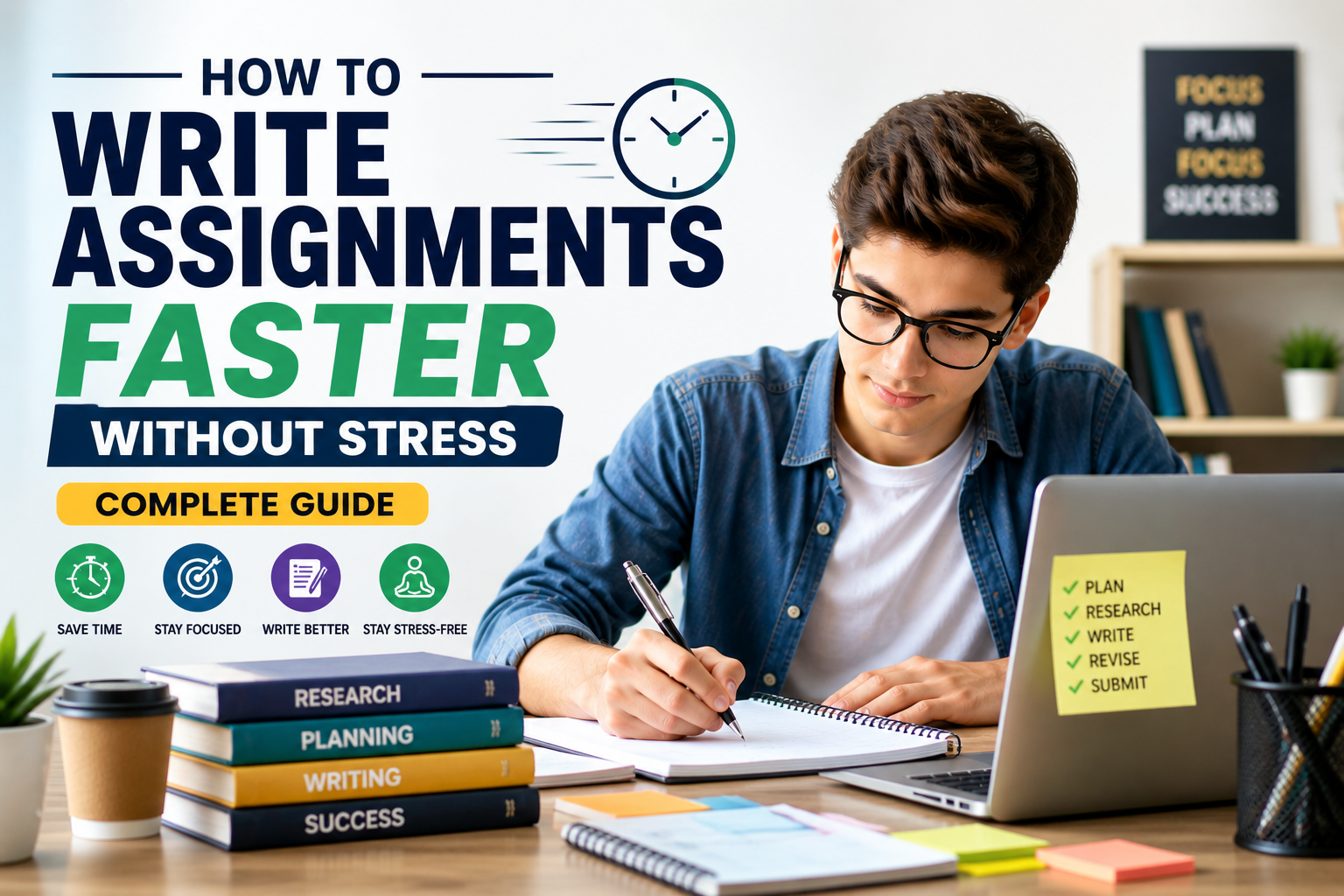
Step 3: Create a Simple Outline Before Writing
An outline is one of the most powerful tools for writing assignments quickly. It helps you organize your ideas and ensures a logical flow of information. Without an outline, students often get stuck thinking about what to write next. Online Essay Writing
Your outline does not need to be complicated. Start with the main sections: introduction, body paragraphs, and conclusion. Then add key points under each section. For example, each body paragraph should focus on one main idea supported by evidence.
This structure allows you to write more confidently and quickly, as you already know what each section will contain.
Step 4: Focus on Writing First, Editing Later
One of the biggest mistakes students make is trying to edit while writing. This slows down progress and disrupts the flow of ideas. Instead, focus on completing the first draft without worrying too much about perfection.
Write freely and concentrate on expressing your ideas clearly. If you are unsure about a sentence, move on and come back to it later. The goal is to complete the draft as quickly as possible.
Once the draft is finished, you can take time to revise and improve it. Separating writing and editing helps you work more efficiently and reduces stress.
Step 5: Use Time Management Techniques
Effective time management is essential for writing assignments faster. One useful method is the Pomodoro Technique, where you work for 25 minutes and then take a short break. This keeps your mind fresh and prevents burnout.
Set realistic goals for each study session. For example, aim to complete one section of your assignment within a specific time. This creates a sense of progress and keeps you motivated.
Avoid distractions such as social media or unnecessary multitasking. Create a quiet and comfortable study environment where you can focus fully on your work.
Step 6: Write Clear and Concise Paragraphs
Writing faster does not mean writing poorly. In fact, clear and concise writing helps you complete assignments more efficiently. Avoid using overly complex sentences or unnecessary words.
Each paragraph should focus on a single idea. Start with a topic sentence, provide supporting details, and end with a concluding sentence. This structure makes your writing easier to follow and reduces the need for extensive revisions.
Using simple language and active voice also improves readability and saves time.
Step 7: Avoid Procrastination
Procrastination is one of the biggest obstacles to fast and stress-free assignment writing. Delaying your work increases pressure and reduces the quality of your output.
To overcome procrastination, start your assignment as early as possible. Even working for a short time each day can make a big difference. Break the task into manageable parts and reward yourself after completing each section.
Building a consistent study routine helps you stay disciplined and reduces last-minute stress.
Step 8: Revise and Proofread Efficiently
After completing your first draft, take time to revise and improve your work. Focus on clarity, structure, and accuracy. Check whether your arguments are logical and well-supported.
Proofreading is also important to eliminate grammar, spelling, and punctuation errors. Reading your assignment aloud can help you identify mistakes more easily.
You can also use online tools or ask a friend to review your work. A fresh perspective often highlights areas for improvement.
Step 9: Learn from Feedback
Feedback is a valuable tool for improving your writing skills. Pay attention to comments from your teachers or professors and identify areas where you can improve.
By learning from your mistakes, you can avoid repeating them in future assignments. This not only improves your writing quality but also helps you complete assignments faster over time.
Step 10: Build Consistent Writing Habits
Writing assignments quickly becomes easier with practice. The more you write, the more confident and efficient you become.
Develop a habit of writing regularly, even outside of assignments. Practice organizing your thoughts, improving your vocabulary, and refining your writing style. Over time, these skills will significantly reduce the time and effort required to complete assignments.
Internal Resources for Students
For more helpful guides, you can explore:
- Essay Writing Tips for Beginners
- How to Avoid Plagiarism in Academic Writing
- Time Management Strategies for Students
These resources can further enhance your academic writing skills and productivity.
Conclusion
Writing assignments faster without stress is not about rushing or cutting corners. It is about working smarter, staying organized, and using effective strategies. By planning your work, managing your time, and focusing on clear writing, you can complete assignments efficiently while maintaining high quality.
Remember that improvement takes practice. The more you apply these techniques, the more confident and productive you will become. Instead of feeling overwhelmed by assignments, you will approach them with a clear plan and a positive mindset.
Start implementing these strategies today, and you will soon notice a significant difference in both your speed and your academic performance.
[…] How to Write Assignments Faster Without Stress (Complete Guide) […]