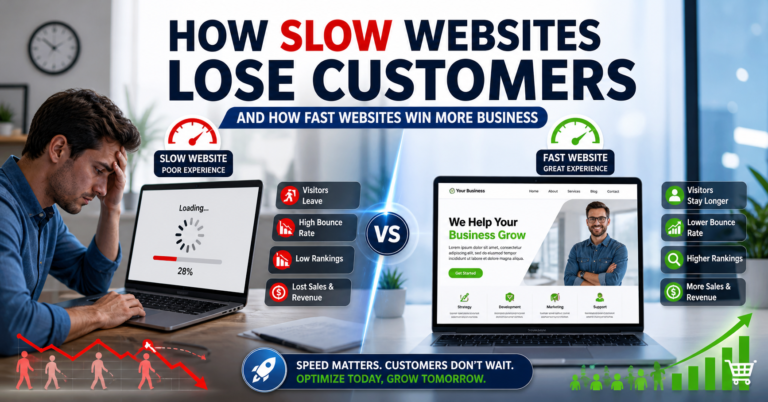
How Slow Websites Lose Customers: The Complete Guide for Businesses in 2026 In today’s digital world, a website is often the first interaction customers have with a business. Whether someone is searching for products, services, or information, they expect websites to load quickly and work smoothly. If a website takes too long to load, most users simply leave and move to a competitor. This is why website speed has become one of the most important factors for online success in 2026.
Many business owners focus heavily on website design, social media marketing, and advertising, but they ignore one critical issue: website performance. A slow website does not just frustrate users; it directly affects customer trust, search engine rankings, conversion rates, and overall revenue. Even a delay of a few seconds can cause businesses to lose valuable visitors and potential customers.
This complete guide explains how slow websites lose customers, why speed matters more than ever, and what businesses can do to improve website performance for better SEO rankings and higher sales. Essay Writing Assignments
Why Website Speed Matters More Than Ever
Internet users have become increasingly impatient. With high-speed internet and mobile browsing becoming standard worldwide, people now expect websites to load almost instantly. Research consistently shows that users often leave websites that take more than a few seconds to appear.
Google also prioritizes fast-loading websites because page speed improves user experience. Websites that load quickly tend to rank higher in search results, keep visitors engaged longer, and convert more customers. On the other hand, slow websites often suffer from high bounce rates and lower visibility in Google search rankings.
Website speed affects almost every part of online business performance. It influences how users feel about a brand, how long they stay on a page, and whether they decide to buy a product or contact a business. A fast website creates a professional impression, while a slow website can make a company look outdated or unreliable.
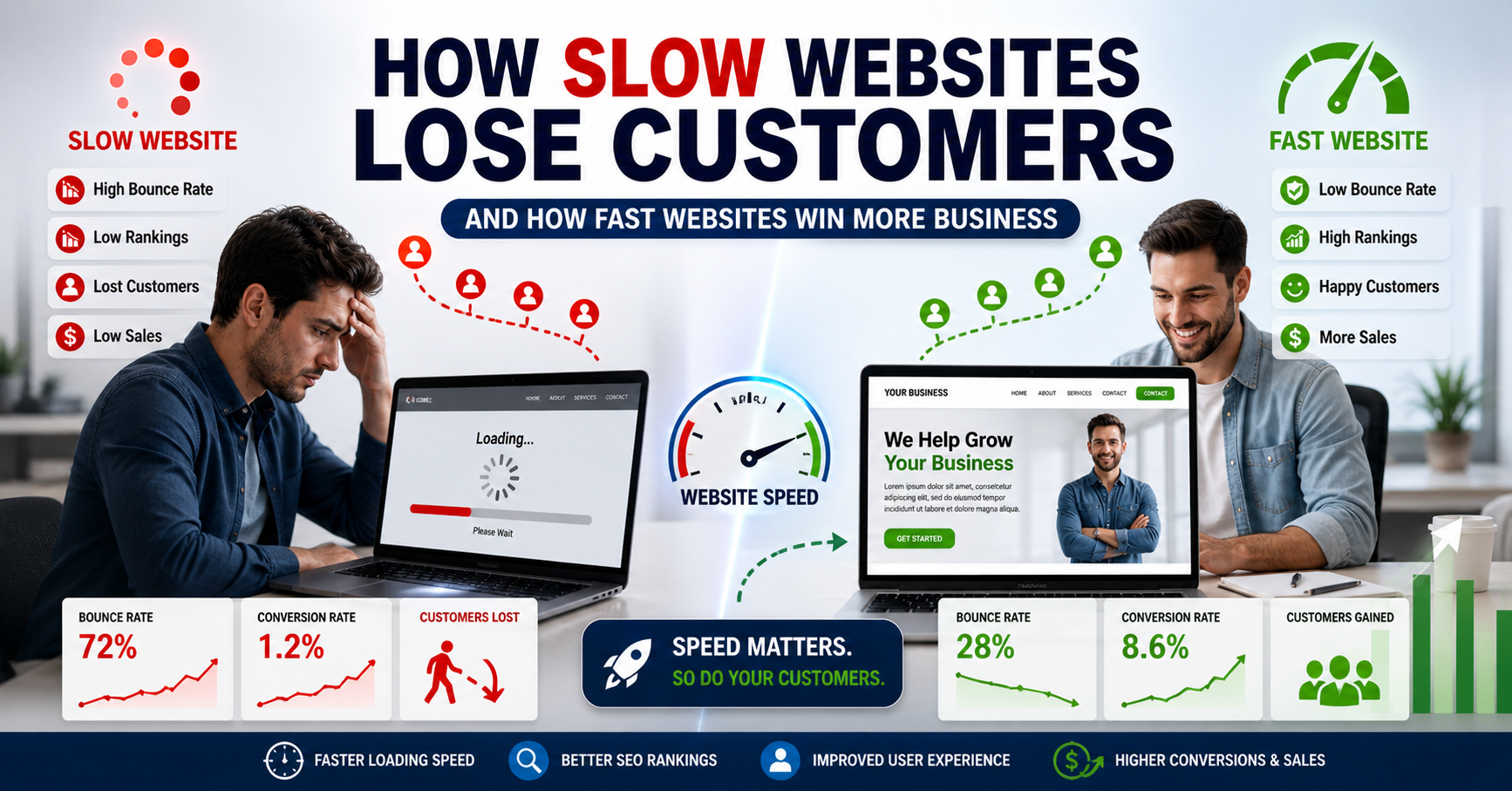
How Slow Websites Lose Customers The First Impression Problem
First impressions happen within seconds online. When users click on a website link, they immediately judge the experience based on loading speed and responsiveness. If the page loads slowly, visitors often become frustrated before they even see the content.
A slow-loading website sends negative signals to users. It suggests poor maintenance, outdated technology, or lack of professionalism. In highly competitive industries, customers rarely wait for slow websites because there are always alternative options available.
For example, imagine a potential customer searching for a digital marketing agency. They open two websites. One loads instantly and looks professional. The other takes several seconds to appear. Most users will naturally trust the faster website more.
This simple behavior demonstrates why page speed is directly connected to customer trust and business credibility.
How Slow Websites Increase Bounce Rates
Bounce rate refers to the percentage of visitors who leave a website without interacting further. Slow websites typically experience significantly higher bounce rates because users lose patience quickly. Online Essay Writing
When visitors abandon a website immediately after opening it, businesses lose opportunities for engagement, sales, and lead generation. High bounce rates also negatively impact SEO because search engines interpret them as signs of poor user experience.
Mobile users are especially sensitive to slow websites. Since most internet traffic now comes from smartphones, businesses must optimize websites for fast mobile performance. A website that loads slowly on mobile devices risks losing a large portion of potential customers.
Reducing bounce rates requires improving overall page speed, simplifying website design, and optimizing technical performance.
Create 100 Blog Posts in 1 Day Using AI (Step-by-Step)
The Connection Between Website Speed and SEO
Google officially considers website speed as a ranking factor. Faster websites are more likely to appear higher in search engine results pages because they provide better user experiences.
Core Web Vitals, introduced by Google, measure website performance based on loading speed, visual stability, and responsiveness. Websites that perform poorly in these areas may experience ranking declines.
Slow websites often struggle to compete in search rankings, even when they have good content. Businesses investing heavily in SEO campaigns may still fail to achieve strong results if their website performance remains poor.
Search engines want users to have positive browsing experiences. Therefore, websites that load quickly are rewarded with better visibility and more organic traffic.
Why Customers Abandon Slow E-Commerce Websites
E-commerce websites suffer greatly from slow loading times because online shoppers expect smooth and fast experiences. Customers browsing products or completing purchases become frustrated if pages load slowly.
Studies show that slow checkout pages significantly increase cart abandonment rates. Even a small delay during payment processing can cause customers to leave before completing their orders.
Customers often associate slow websites with security risks or unreliable services. If a shopping website feels slow or unstable, users may hesitate to enter payment details.
Fast-loading e-commerce websites improve customer confidence, encourage longer browsing sessions, and increase overall sales conversions.
Mobile Speed Is Critical in 2026
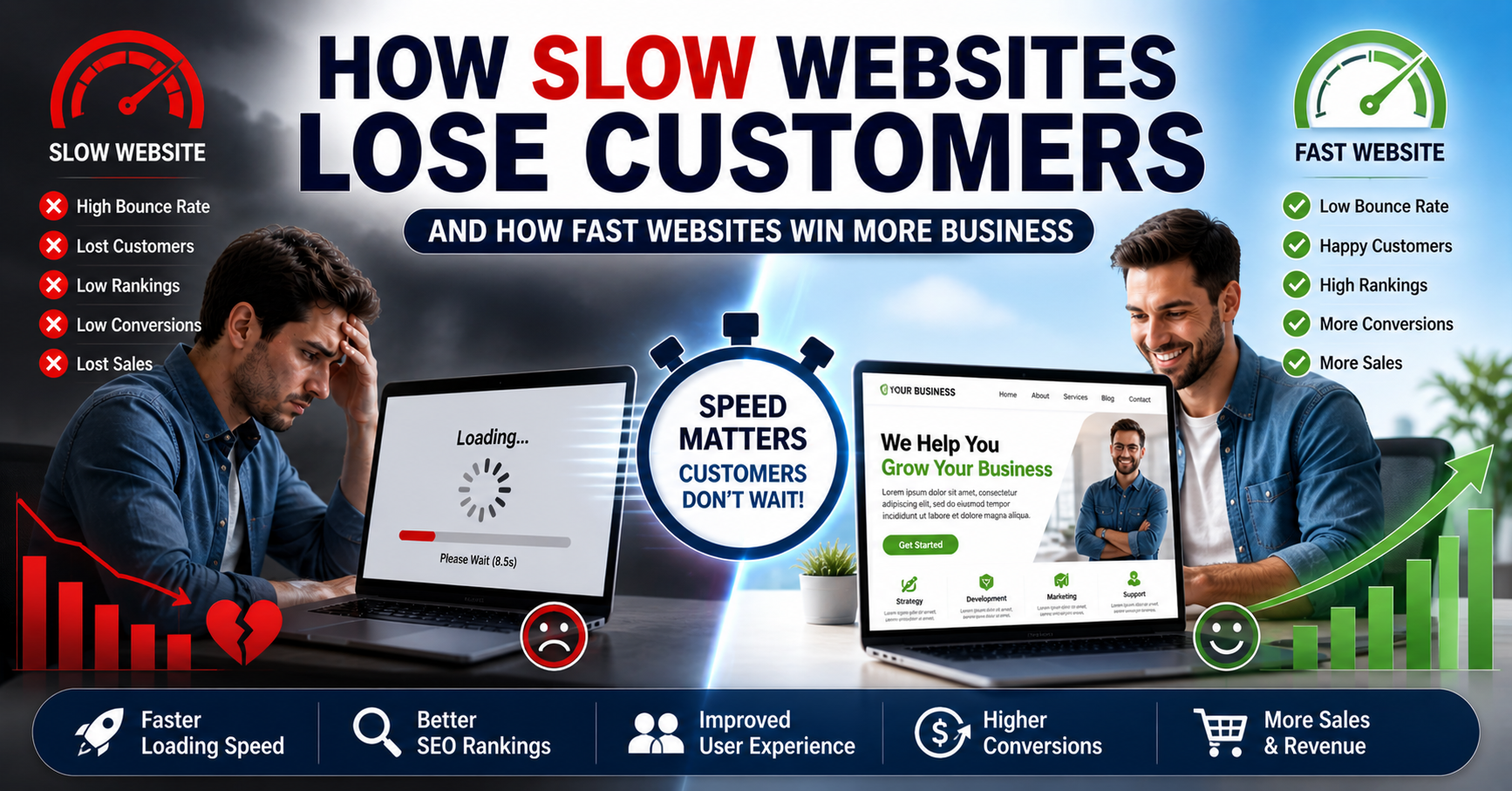
Mobile browsing now dominates internet usage globally. Most customers access websites through smartphones rather than desktop computers. Because mobile users frequently browse while traveling or multitasking, they expect fast-loading pages.
Google also uses mobile-first indexing, meaning the mobile version of a website plays a major role in SEO rankings. Businesses with slow mobile websites risk losing both traffic and visibility.
Responsive design alone is not enough. Websites must also optimize images, reduce unnecessary scripts, and improve hosting performance to ensure smooth mobile experiences.
Businesses that ignore mobile speed optimization may lose customers to competitors with faster and more user-friendly websites.
Common Reasons Websites Become Slow
Many factors can reduce website performance. One of the most common problems is oversized images. Large image files increase loading times significantly, especially on mobile devices.
Poor-quality web hosting is another major issue. Cheap hosting services often provide limited resources, causing websites to respond slowly during traffic spikes.
Excessive plugins and unnecessary scripts can also harm performance. Many businesses install multiple plugins without realizing they slow down the website.
Other common causes include outdated website themes, lack of browser caching, unoptimized code, and too many advertisements or animations.
Understanding these problems is the first step toward improving website speed and user experience.
How Slow Websites Hurt Brand Reputation
A business website represents the company online. If the website performs poorly, customers may assume the business itself lacks professionalism or reliability.
Users often judge companies based on their digital experiences. A fast and modern website builds trust, while a slow website creates frustration and doubt.
In competitive industries, customers have many alternatives available. Businesses cannot afford to lose credibility because of poor website performance.
Brand reputation affects long-term customer relationships, referrals, and repeat business. Improving website speed helps create positive impressions that strengthen customer trust over time.
The Financial Cost of Slow Websites
Slow websites directly impact revenue. Every second of delay can reduce conversions, lower customer satisfaction, and decrease sales opportunities.
Businesses spending money on paid advertising may waste their budgets if visitors leave before pages fully load. Slow websites reduce the effectiveness of marketing campaigns because fewer users stay engaged.
For service-based businesses, slow websites can also reduce inquiries and lead generation. Potential clients may abandon contact forms or booking pages if they load slowly.
Improving website performance is not simply a technical upgrade; it is an investment in business growth and profitability.
Practical Ways to Improve Website Speed
Improving website speed requires both technical optimization and smart design choices. Compressing images is one of the easiest and most effective solutions. Modern image formats help reduce file sizes without sacrificing quality.
Choosing reliable hosting services also makes a significant difference. High-performance hosting improves loading times, uptime, and overall website stability.
Businesses should regularly remove unnecessary plugins and update website software to improve efficiency. Using caching systems and content delivery networks can also enhance loading speed globally.
Clean website design improves both performance and usability. Websites overloaded with animations, popups, or heavy graphics often load slowly and frustrate users.
Regular speed testing using tools like Google PageSpeed Insights helps identify problems and track improvements.
Why Fast Websites Improve Customer Experience
Fast websites create smooth, enjoyable experiences for users. Customers can access information quickly, navigate pages easily, and complete actions without delays.
Positive user experiences encourage visitors to stay longer, explore more pages, and interact with the business. This increases engagement, conversions, and customer satisfaction.
Fast-loading websites also improve accessibility for users with slower internet connections or older devices. Businesses that prioritize speed create better experiences for wider audiences.
Customer experience is now a major competitive advantage online. Website speed plays a central role in building that experience successfully.
The Future of Website Performance
Website speed expectations will continue increasing in the future. As technology advances, users will become even less tolerant of delays and poor performance.
Businesses must view website optimization as an ongoing process rather than a one-time task. Regular maintenance, monitoring, and updates are essential for staying competitive online.
Artificial intelligence, advanced caching systems, and modern development frameworks are already helping websites load faster and deliver better experiences. Companies that adapt to these changes will gain significant advantages.
Investing in website performance today helps businesses remain competitive in the evolving digital landscape.
Final Thoughts
A slow website is more than just a technical inconvenience. It affects customer trust, SEO rankings, conversion rates, brand reputation, and overall business growth. In 2026, users expect fast, smooth, and professional online experiences. Businesses that fail to meet these expectations risk losing valuable customers to competitors.
Improving website speed should be a priority for every business owner. From image optimization and better hosting to mobile performance and clean design, every improvement contributes to better customer experiences and stronger online results.
A fast website does not only help businesses rank higher on Google — it also helps build trust, increase engagement, and drive more sales. In the modern digital marketplace, speed is no longer optional. It is essential for success.
[…] How Slow Websites Lose Customers: The Complete Guide for Businesses in 20 […]